
Turnkey PCB Assembly Procurement Ownership: Who Approves What?
Direct answer: Turnkey PCB assembly transfers purchasing execution and coordination, not authority over design intent. The customer should approve the released design, functional substitutions, acceptance criteria, and major schedule tradeoffs; the provider should document options and execute the approved path.
What decision does this guide support?
This guide separates decisions a turnkey provider can execute from decisions that require customer engineering or commercial approval. Use it before purchasing begins so shortages, substitutions, test scope, and delivery assumptions have named owners.
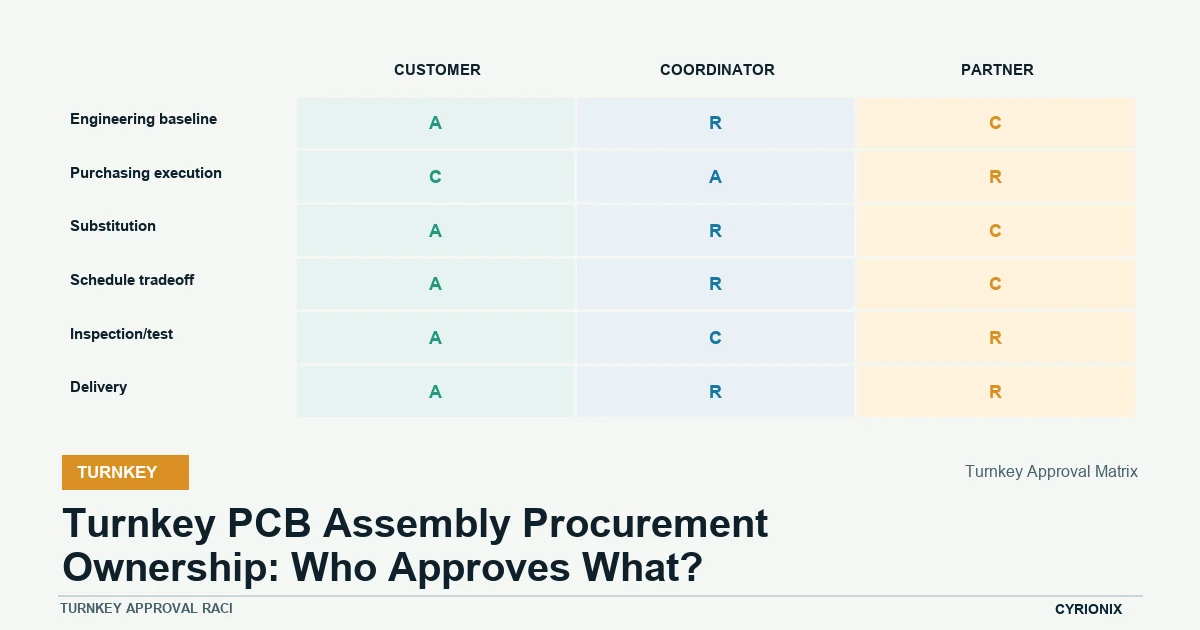
Turnkey Approval Matrix
Use the matrix to assign one accountable decision maker for each project boundary. Procurement should pause whenever a choice requires engineering interpretation or changes an agreed acceptance condition.
| Decision factor | How to evaluate it | Stop condition |
|---|---|---|
| Engineering baseline | Customer approves design intent, revision, variant, and acceptance criteria. | Procurement begins before the baseline is coherent. |
| Purchasing execution | Provider sources to the approved BOM and documented alternate rules. | A line requires engineering interpretation. |
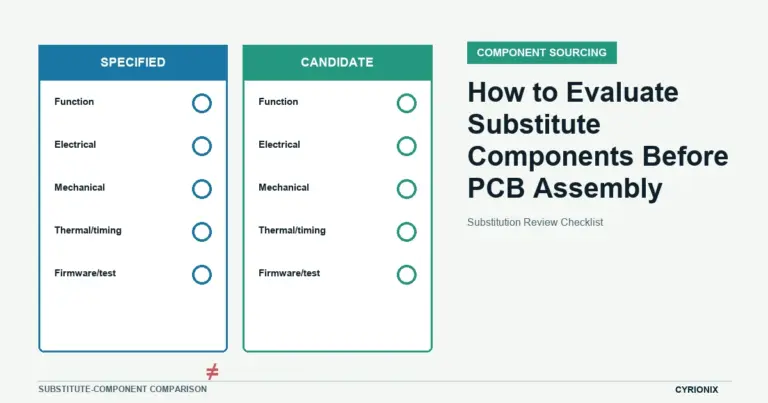
| Substitution | Provider gathers evidence; customer engineering approves functional change. | Purchase would precede explicit approval. |
| Schedule tradeoff | Provider presents dependency and options; customer accepts impact and priority. | An expedite decision silently removes validation. |
| Inspection/test | Both parties agree coverage, limits, evidence, and failure disposition. | Testing is a label rather than a deliverable. |
| Delivery | Provider coordinates the agreed packaging and shipping scope; customer confirms destination needs. | Responsibility or Incoterm assumptions conflict. |
What turnkey transfers and what it does not
A turnkey scope can include PCB fabrication, component purchasing, assembly, inspection, and delivery coordination. It does not give the provider authority to change electrical function, mechanical fit, firmware behavior, regulatory requirements, or acceptance criteria without approval.
Decisions the provider can execute
The provider can place orders against an approved BOM, coordinate approved sources, plan the build, and manage the agreed logistics. Execution remains bounded by the released package, alternate rules, budget, schedule, and evidence requirements.
Decisions engineering must approve
Customer engineering should approve any substitute that changes fit, form, function, lifecycle assumptions, firmware compatibility, or qualification status. The approval record should identify the affected line, supporting comparison, quantity, and effective build.
Escalation rules for shortages
A shortage notice should state the affected part, required date, available quantity, proposed options, cost or schedule impact, and response deadline. If validation would be compressed, that consequence needs explicit customer acceptance.
Approval records before purchasing
Keep approvals with the purchasing record rather than only in a messaging thread. The BOM line, quoted source, date code or traceability requirement, and authorized response should be recoverable during inspection and repeat ordering.
Ownership matrix
Complete the matrix for engineering baseline, purchasing, substitutions, schedule, inspection and test, and delivery. Conflicting Incoterm, packaging, destination, or failure-disposition assumptions should be resolved before commitments are made.
Set the approval path before purchase orders
- Release the baseline. Confirm design, revision, variant, and acceptance criteria.
- Define delegated authority. State which actions the provider may take without a new approval.
- Record exceptions. Tie every approved substitution or tradeoff to the affected BOM line and build.
Related Cyrionix resources
Review the turnkey PCB assembly service and consigned-versus-turnkey guide before assigning purchasing responsibilities.