
Prototype PCB Assembly for Engineering Validation
Build assembled boards to test design intent, expose manufacturing questions and prepare a cleaner transition to the next revision or low-volume batch.
What a reviewable prototype package contains
- Gerber files or another agreed fabrication-data format
- BOM with manufacturer part numbers, quantities and DNP status
- CPL, centroid or pick-and-place coordinates
- Assembly drawings with polarity and connector-orientation notes
- Programming and test instructions when required
- Board quantity, delivery country and target schedule
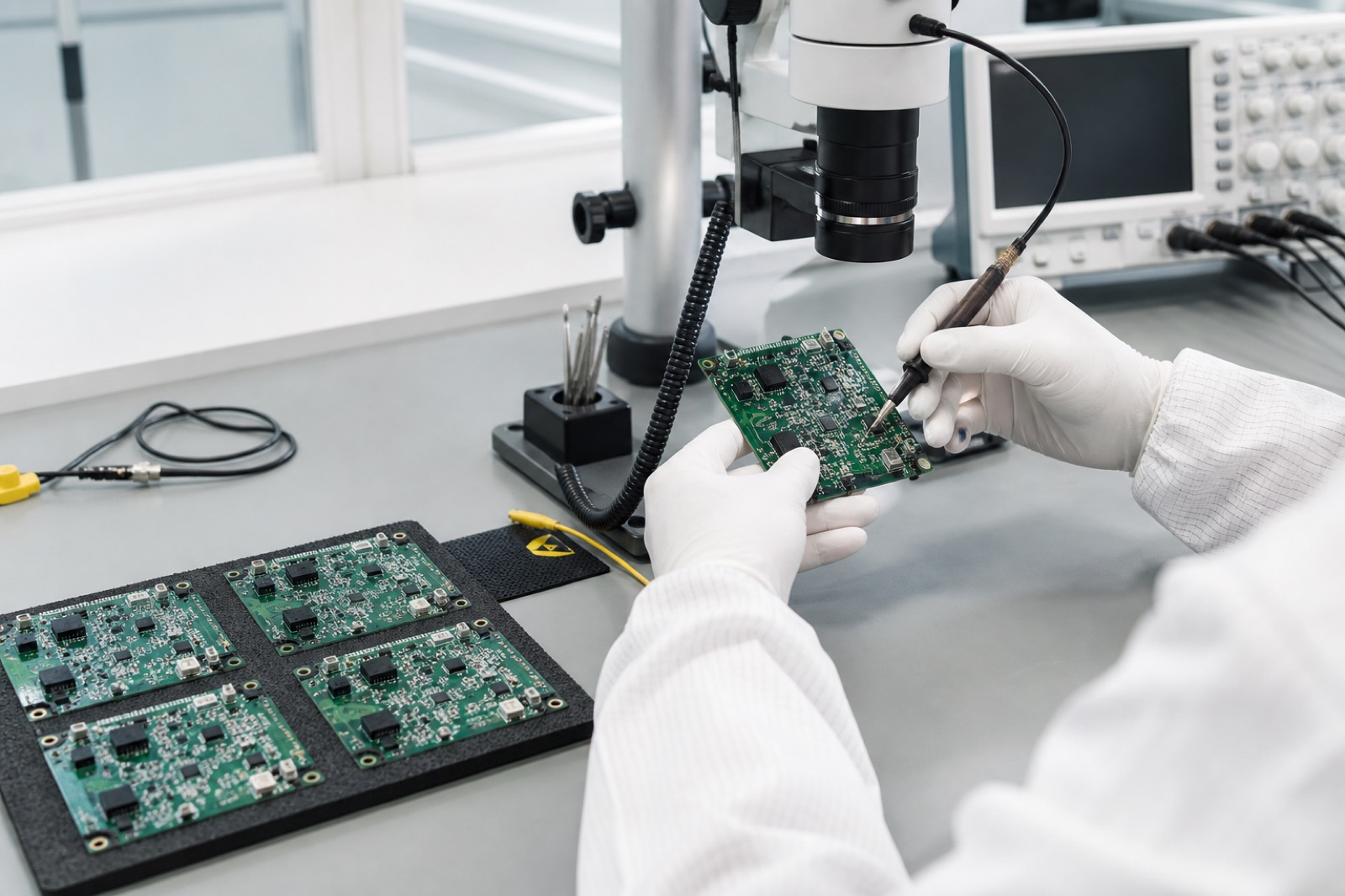
Seven steps from files to feedback
- Define the prototype objective and the questions this build must answer.
- Check file revisions and resolve obvious data conflicts.
- Review BOM availability, lifecycle risk and approved alternatives.
- Confirm the quotation, selected manufacturing partner and agreed scope.
- Coordinate PCB fabrication, component purchasing and assembly.
- Complete the inspection, programming or test steps defined for the build.
- Record findings and release the next revision or low-volume build package.
Decisions that should not be left implicit
| Decision | Why it matters | What to provide |
|---|---|---|
| DNP parts | Prevents unintended placement | Explicit BOM and drawing marks |
| Substitutions | Electrical and mechanical fit require customer ownership | Approved alternates or an approval contact |
| Polarity and orientation | Library data and physical markings can conflict | Assembly drawing and special notes |
| Programming | Firmware, interfaces and pass criteria vary | Files, instructions and fixture information |
| Functional test | A supplier cannot infer product behavior | Procedure, expected result and acceptance limits |
Prototype PCB assembly questions
What is the purpose of a PCB assembly prototype?
It creates a small number of assembled boards so the team can validate design behavior, interfaces, manufacturability and the manufacturing package before a repeat production stage.
Can you quote from Gerber files alone?
A bare-board quote may be possible, but an assembly review normally also needs a BOM, placement data, drawings and any programming or test requirements.
Is a fast prototype automatically a quick-turn project?
No. Quick-turn intent depends on complete data, available components, complexity, test scope and an agreed production schedule.

Ready to discuss your build?
Share your BOM, Gerber files, quantities and target schedule. We will review the project and respond with practical next steps.
For current sourcing context, see the 2026 North American PCB sourcing research.