How to Prepare a PCB Assembly RFQ That Gets an Accurate Quote
Direct answer: An accurate PCB assembly RFQ defines the build stage, released files, sourcing model, inspection and test scope, quantities, destination, and commercial assumptions. Quotes are comparable only when suppliers price the same work and identify the same exclusions.
What decision does this guide support?
This guide helps buyers prepare an RFQ that exposes assumptions before price comparison. The checklist separates technical scope, purchasing responsibility, quality evidence, and delivered commercial basis.
RFQ Information Checklist
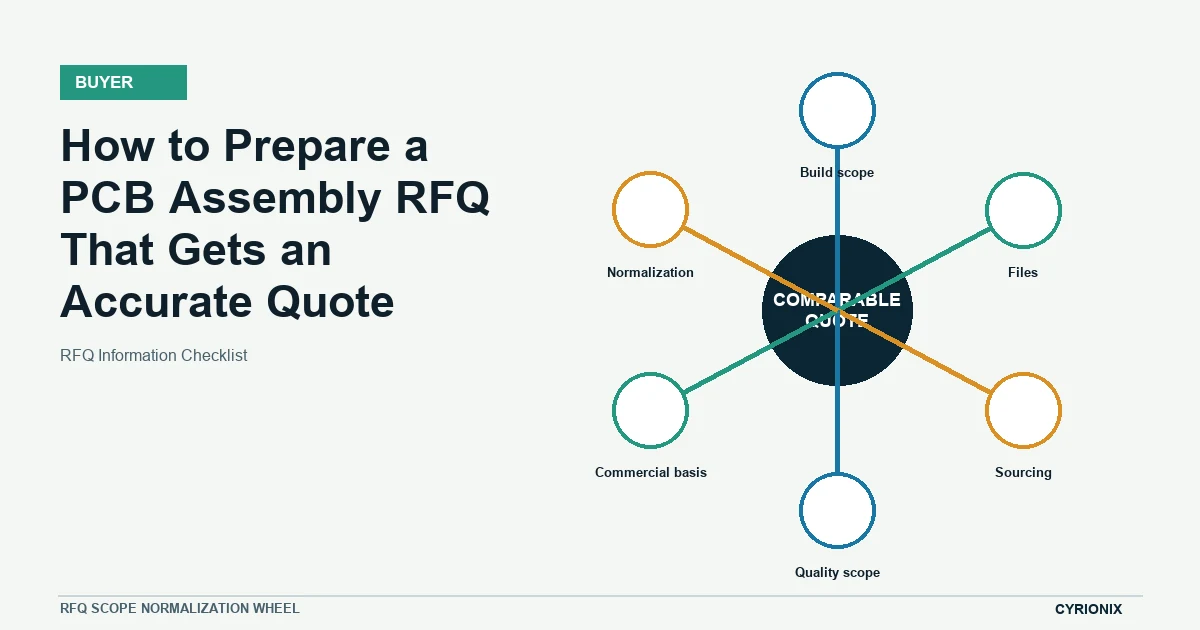
Complete each row or mark it explicitly as pending. A supplier can price an unknown as an assumption, but the assumption must remain visible in the quotation.
| Checklist item | Required evidence | Hold condition |
|---|---|---|
| Build scope | State prototype, validation, pilot, or repeat batch and the decision it supports. | Suppliers assume different service levels. |
| Files | Provide fabrication, BOM, CPL, drawings, variants, and revision identity. | The package cannot be reconciled. |
| Sourcing | State consigned/turnkey split, alternates, source controls, excess, and ownership. | Quotes use different purchasing assumptions. |
| Quality scope | Define inspection coverage, acceptance criteria, test, data, and failure handling. | The word tested has no shared meaning. |
| Commercial basis | State quantities, recurring demand, schedule driver, packaging, destination, and terms needed. | Delivered scope differs across quotes. |
| Normalization | Compare inclusions, exclusions, assumptions, one-time costs, and material exposure line by line. Use the transaction-specific PCB and PCBA landed-cost method to keep policy, quote, freight, commercial, inventory, and execution inputs separate. | A lower headline excludes required work. |
Define the build stage
State whether the order is a prototype, validation build, pilot run, or repeat batch and explain the decision it supports. This context affects setup, material commitment, documentation, and the type of feedback expected.
Required manufacturing files
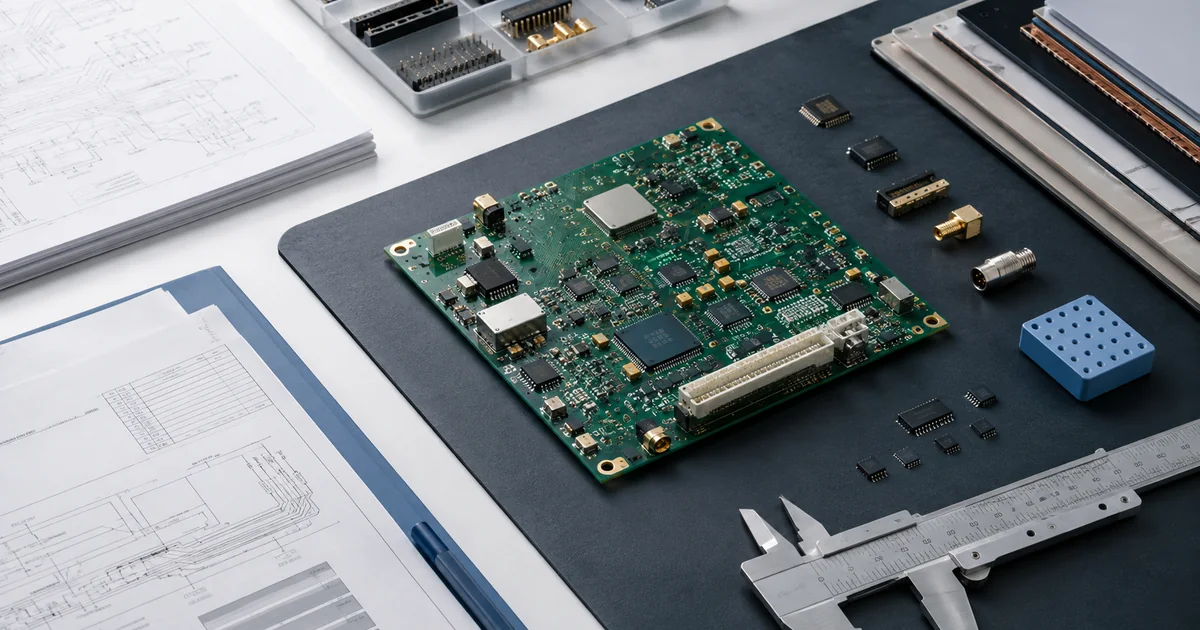
Send fabrication data, BOM, CPL, drawings, variants, and a common revision identifier. A manifest is useful when files were exported at different times or when more than one product option shares a design.
Sourcing and substitution rules
Identify consigned and provider-purchased items, approved sources, alternate rules, traceability needs, and responsibility for excess material. State who can approve a shortage response and how that approval will be recorded.
Inspection, programming, and testing
Replace broad requests such as “fully tested” with named coverage, limits, fixtures, software, data, and failure handling. If the method is still being developed, request a separate line item and list the inputs that remain open.
Packaging and delivery
Specify quantities, lot splits, labels, moisture or ESD needs, destination, target date, and the commercial term needed for comparison. Delivery scope should include any required export packaging and documentation.
Normalize quote assumptions
Compare material basis, one-time charges, tooling ownership, test coverage, excess material, freight, duties, validity, and exclusions line by line. A lower headline is not a saving when required work or transaction costs sit outside the quote.
Build a comparable quotation set
- Issue one RFQ package. Give every bidder the same files, quantities, and response deadline.
- Require assumptions. Ask suppliers to list exclusions and unresolved technical questions.
- Normalize delivered scope. Compare one-time, recurring, material, test, packaging, and logistics costs separately.
Related Cyrionix resources
Continue with the PCB assembly services overview and cost-driver guide when normalizing quotations.