
Turnkey vs Consigned PCB Assembly: What Is the Difference?
Compare who purchases PCBs and components, who carries material risk and which information each assembly model requires.
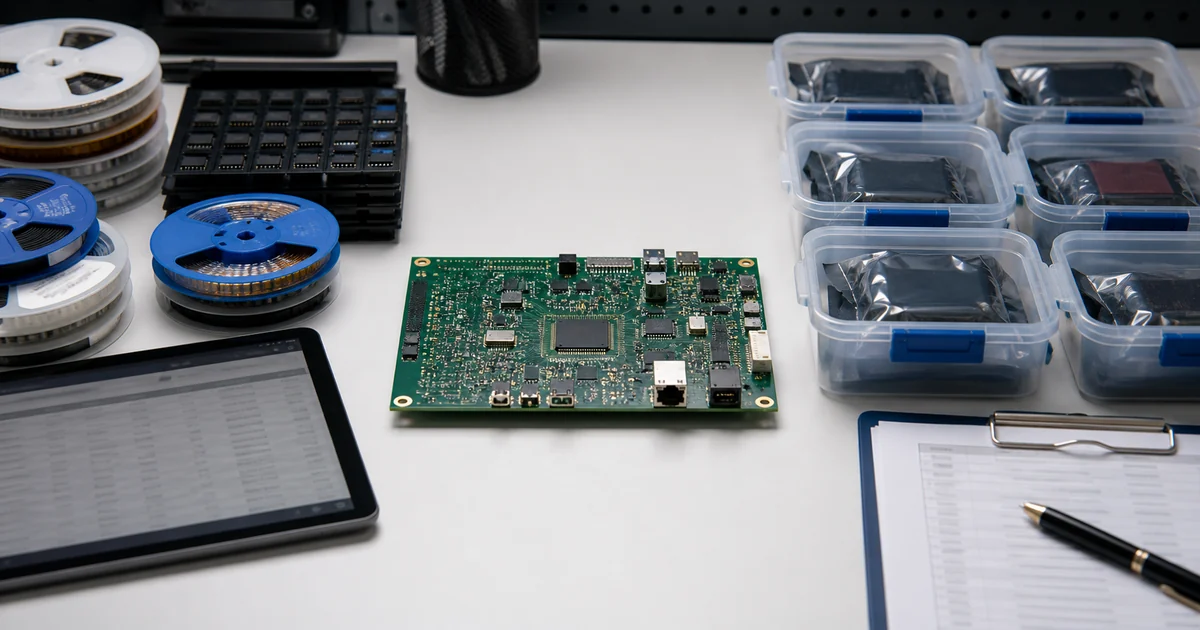
In turnkey PCB assembly, the supplier purchases the agreed PCBs and components and coordinates assembly. In consigned assembly, the customer supplies some or all production materials. Partial turnkey splits responsibility. The right model depends on material ownership, controlled parts, sourcing requirements, internal procurement capacity and who can resolve shortages fastest.
Responsibility matrix
| Question | Full turnkey | Partial turnkey | Consigned |
|---|---|---|---|
| Who buys the PCB? | Supplier within scope | Either party by agreement | Customer usually supplies |
| Who buys components? | Supplier within approved BOM | Responsibility is split | Customer supplies most or all |
| Who manages shortages? | Supplier coordinates options; customer approves changes | Shared by ownership | Customer replaces missing kit items |
| Who carries excess material? | Defined by quotation | Defined by each purchased group | Customer owns supplied excess |
| What must be controlled? | MPNs, channels, approvals and scope | Clear ownership by BOM line | Kit quantity, labeling and condition |
Choose full turnkey when
- You want one coordinated fabrication, purchasing and assembly path.
- Your team can approve sourcing questions quickly.
- The BOM is specific enough to quote and purchase.
Choose partial turnkey when
- You already own critical, allocated or pre-programmed parts.
- Some lines require customer-controlled purchasing channels.
- The remaining material can be coordinated with the build.
Choose consigned when
- Your organization requires full material ownership.
- Components are drawn from an internal approved inventory.
- You can deliver a complete, correctly labeled kit with attrition quantities.
Put the model in the RFQ
Mark every BOM line as supplier-purchased, customer-supplied or subject to review. State required channels, traceability, approved alternatives and ownership of unused material. “Turnkey” alone is not a complete commercial or technical scope.
Excess Component Responsibility Checklist
Before purchasing, document what happens to material bought for the build but not consumed. The correct answer depends on the commercial model and written project terms.
- Quantity basis: requested build quantity, purchase quantity, expected attrition and actual consumed quantity.
- Pricing transparency: part cost, sourcing service or markup basis, packaging/MOQ effects and non-cancellable items.
- Ownership: who owns unused, customer-supplied, substituted and damaged material at each stage.
- Storage: period, conditions, moisture/ESD handling where applicable, fees and the decision date.
- Identity records: MPN, lot/date data where required, received/used/balance quantities and project allocation.
- Reuse approval: whether remaining stock may enter a later revision and who confirms lifecycle, condition and compatibility.
- Return or disposal: shipment method, cost, timing, disposal authorization and evidence.
- Reconciliation: final balance report, variance disposition and named approver.
Do not accept “turnkey” or “consigned” as a substitute for these written responsibilities.
Continue your project planning
Use the related service and resource pages to turn this guidance into a reviewable manufacturing request.