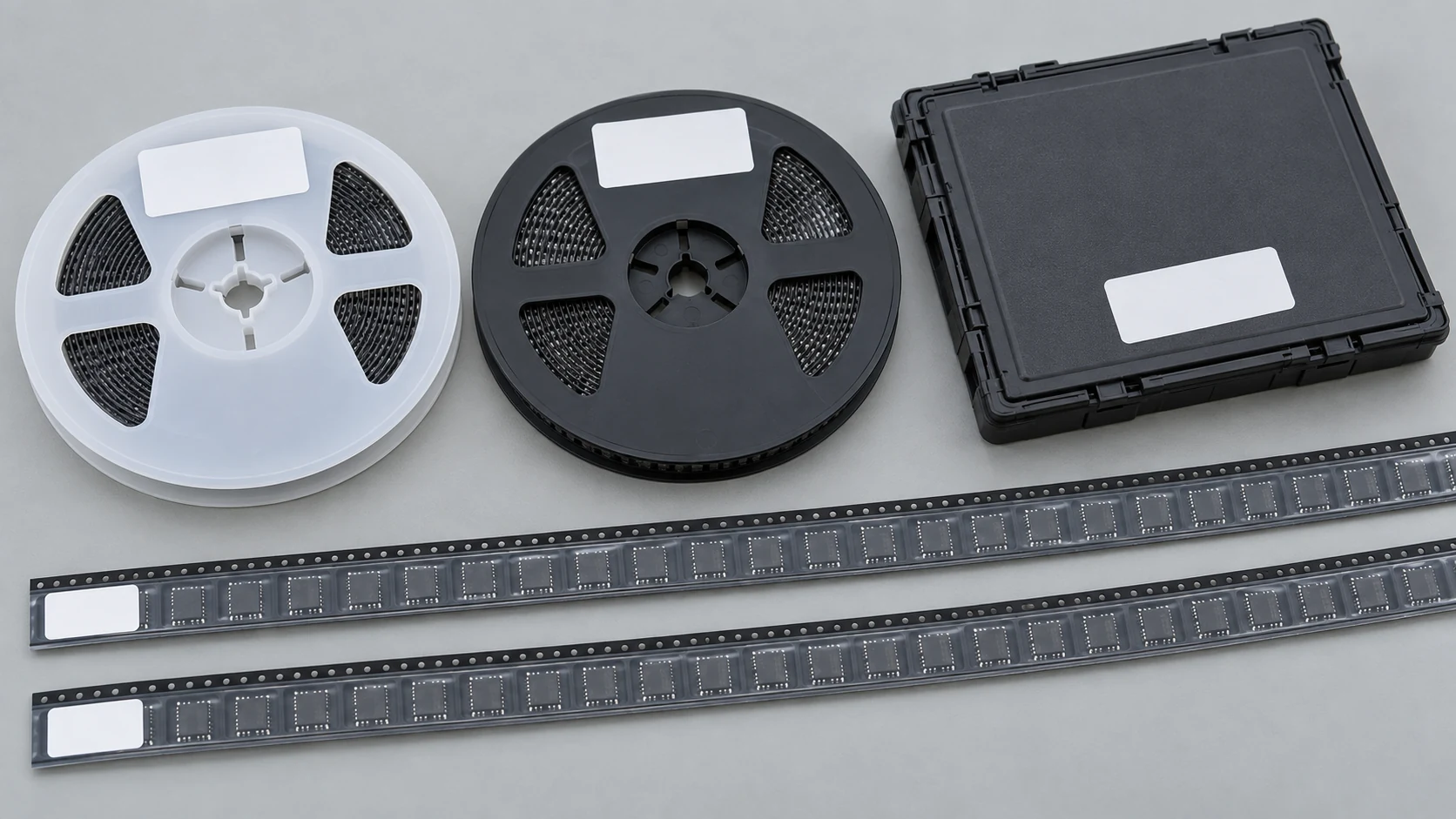
How to Kit Components for Consigned PCB Assembly
Before shipping components for consigned PCB assembly, confirm the required quantities, packaging and labels with the assembler. Each reel, strip, tray or tube should be identifiable against the released BOM. The receiving team also needs enough handling information to decide whether the material can be used.
This guide covers the physical handoff of customer-supplied components. The turnkey versus consigned assembly guide explains who purchases the material; the BOM preparation article covers purchasing information.
Build the kit against a specific quantity and configuration
Start with the approved assembly revision and the quantity of each part fitted per board. List quantities separately for different variants and identify parts installed in a later operation. Exclude parts that appear in the schematic but are not fitted in the ordered configuration.
Calculate nominal consumption as quantity per assembly multiplied by build quantity. Then add the assembler’s agreed setup, attrition and spare requirements. There is no universal percentage that works for a short strip of tiny passives, an expensive BGA and a hand-installed connector. Packaging and feeder setup can matter as much as the assembly count.
For example, 25 boards with eight identical resistors require 200 placements. If the assembler explicitly requests 20 additional usable pieces, the kit target is 220. That extra quantity is an illustrative agreement, not a recommended allowance for every resistor. Confirm how missing or damaged pockets and leader/trailer requirements affect the usable quantity.
Confirm acceptable packaging before shipping
Ask whether each line is accepted on a full reel, cut tape, tray or tube. Keep devices in protective packaging that maintains orientation and prevents lead damage. Do not pour loose ICs into a bag or mix part numbers in a shared compartment. Cut tape should remain identifiable and protected; joining separate strips or re-reeling needs prior agreement.
The Screaming Circuits receiving guidance, for example, asks customers to identify packages against the BOM, provide extra material for assembly losses and protect sensitive parts. Check your assembler’s written kit instructions for its specific requirements.
Use a receiving sheet that exposes shortages
A receiving sheet can use the format below. The resistor row uses the 25-board example above; replace the sample references and quantities with those for your build.
| BOM line / references | Build demand | Kit target | Receiving decision |
|---|---|---|---|
| 10 / R1-R8 | 200 pieces | 220, per agreed allowance | Count usable pockets; record reel identity. |
| 20 / U1 | 25 pieces | Per approved setup plan | Check exact orderable MPN, tray and handling records. |
| 30 / J1 | 25 pieces | Per agreed connector allowance | Check mating variant, orientation and damaged contacts. |
| 40 / optional module | Not fitted | Zero for this configuration | Exclude from this kit; retain the configuration note. |
Add the manufacturer, exact manufacturer part number (MPN), packaging type, actual received quantity and receipt date. Include lot or date codes where required, and name the person responsible for resolving each shortage. Confirm receipt with the assembler: a carrier’s delivery confirmation does not mean the kit has passed incoming checks.
Preserve identity and handling history
Keep original supplier labels and source records with the material. When splitting a package, link the new package label to the original part and lot information; do not create a label that appears to have been issued by the manufacturer. Record distributor stock numbers separately from manufacturer part numbers.
For moisture-sensitive devices, include the original sensitivity information and available bag-opening, exposure and storage records. An intact-looking bag is not proof of a known exposure history. Ask receiving to hold unclear material for a process decision rather than assume it can enter reflow. ESD protection and moisture protection are separate requirements; one does not establish the other.
Close the kit before promising a start date
Track partial deliveries by BOM line and shipment reference. Assign a person who can resolve substitutions, shortages and damaged packaging. If the assembler proposes starting without a part, agree which operation will remain incomplete and whether later installation creates extra handling or rework.
Agree what happens to unused material: return it, store it for a named repeat order, or dispose of it with authorization. Count usable returns separately from setup losses and quarantined material. Use that reconciled balance when calculating what to supply for the next build.
Include the split between customer-supplied and assembler-purchased parts in the PCB assembly sourcing scope. Confirm kit acceptance before committing to an assembly start date.
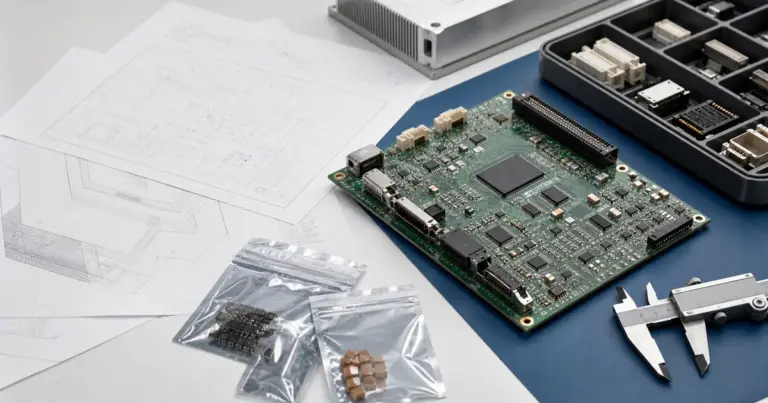
Cover image: AI-generated editorial illustration, not a production record or an acceptance reference.