The Turnkey PCB Assembly Process: From BOM to Finished Boards
Direct answer: A turnkey PCB assembly project moves through release review, coordinated PCB and component purchasing, material approval, assembly preparation, inspection and test, and a documented delivery handoff. The sequence should stop whenever the next stage depends on an unresolved design or sourcing decision.
What decision does this guide support?
This workflow explains what should happen after a turnkey package is submitted and which evidence allows the project to advance. It is intended for buyers who need purchasing and assembly coordinated under one approved baseline.
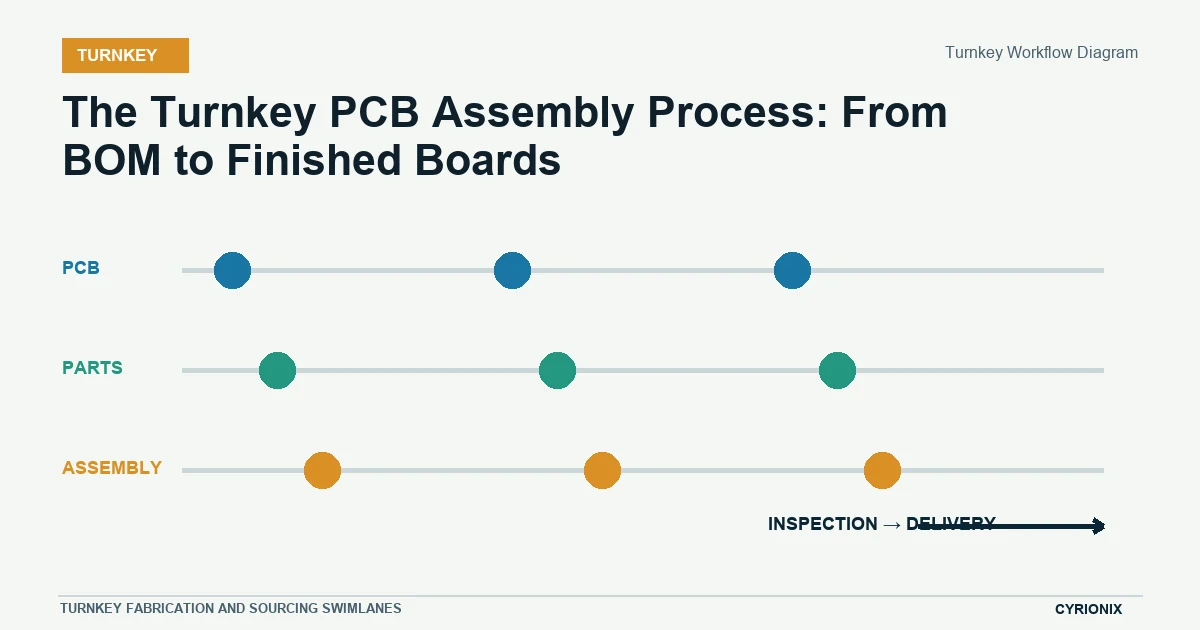
Turnkey Workflow Diagram
The lanes can overlap when dependencies permit, but approval gates remain sequential. Parallel work should shorten elapsed time without allowing provisional data to enter fabrication, purchasing, or assembly.
| Stage | Required output | Do not advance when |
|---|---|---|
| Release review | Reconcile fabrication, BOM, placement, drawings, quantity, and approvals. | The package is incomplete or internally inconsistent. |
| Parallel lanes | Start PCB fabrication and approved component purchasing where dependencies permit. | A long-lead item or board question lacks an owner. |
| Material gate | Resolve shortages, alternates, moisture handling, and received-part issues. | Material status is not ready for a coherent build. |
| Assembly preparation | Complete stencil, programming, setup, work instructions, and first-article plan. | A process input remains provisional. |
| Inspection/test | Execute only the agreed coverage and record deviations against acceptance rules. | A failure has no disposition path. |
| Delivery record | Connect shipped quantity to revision, test evidence, shortages, excess, and open actions. | The handoff cannot explain what was built. |
Release package review
Reconcile fabrication data, BOM, placement, drawings, quantity, variants, and approval rules. Open questions should be assigned before the quotation or purchase plan is treated as complete.
Fabrication and sourcing in parallel
PCB fabrication and approved component purchasing can proceed together after their inputs are stable. Long-lead parts, fabrication questions, and customer-supplied items need visible owners because any one of them can control the schedule.
Material and substitution approvals
Track ordered, received, short, alternate, and quarantined material against the BOM. Functional substitutions require evidence and customer engineering approval before they are released to the build.
Assembly preparation
Complete stencil data, programming inputs, work instructions, setup checks, and the first-article plan before the production lot begins. A provisional process input should remain a hold, not an operator decision.
Inspection and agreed testing
Execute the coverage named in the quotation and acceptance plan. Record deviations and failed-unit disposition against defined limits so “tested” describes a deliverable rather than a label.
Delivery and build records
The handoff should identify shipped quantity, revision, test evidence, shortages, excess material, rework, and open actions. These records establish the starting point for a repeat order or engineering change.
Control the handoffs between stages
- Release coherent inputs. Close package conflicts before commitments begin.
- Expose dependencies. Track PCB, component, approval, programming, and test status separately.
- Deliver the build record. Tie shipped units and evidence to the approved revision.
Related Cyrionix resources
Use the turnkey PCB assembly service and turnkey-versus-consigned guide to define the scope before release.