How to Handle Moisture-Sensitive Components Before PCB Assembly
Before releasing moisture-sensitive components for PCB assembly, check the exact part and package, moisture sensitivity level (MSL), and storage and exposure records. If the history is incomplete, hold the material for review by the process engineer. Resealing a bag or shipping the parts does not reset their accumulated exposure.
The receiving checks below help identify material that needs further review. Use the component manufacturer’s instructions and applicable handling standards to determine storage, exposure and any drying requirements. Continue to follow ESD precautions; moisture-barrier packaging alone does not establish ESD protection.
Identify the part and package before applying a rule
Use the exact orderable manufacturer part number and package information. Check the supplier’s label and device documentation for moisture sensitivity, permitted exposure conditions and applicable processing restrictions. Similar-looking components can have different requirements.
TI’s AN-2029 handling report explains why absorbed moisture can damage susceptible packages during reflow and refers readers to device information and applicable IPC/JEDEC documents. Check the requirements for the exact component before selecting a handling or drying procedure.
Keep shelf life and floor life distinct. Parts may still be within the supplier’s stated shelf life yet need review because of their exposure after opening. Likewise, an older date code alone does not show that a properly stored part is unsuitable for assembly. Check both the storage conditions and the exposure records.
Inspect the packaging and record its condition
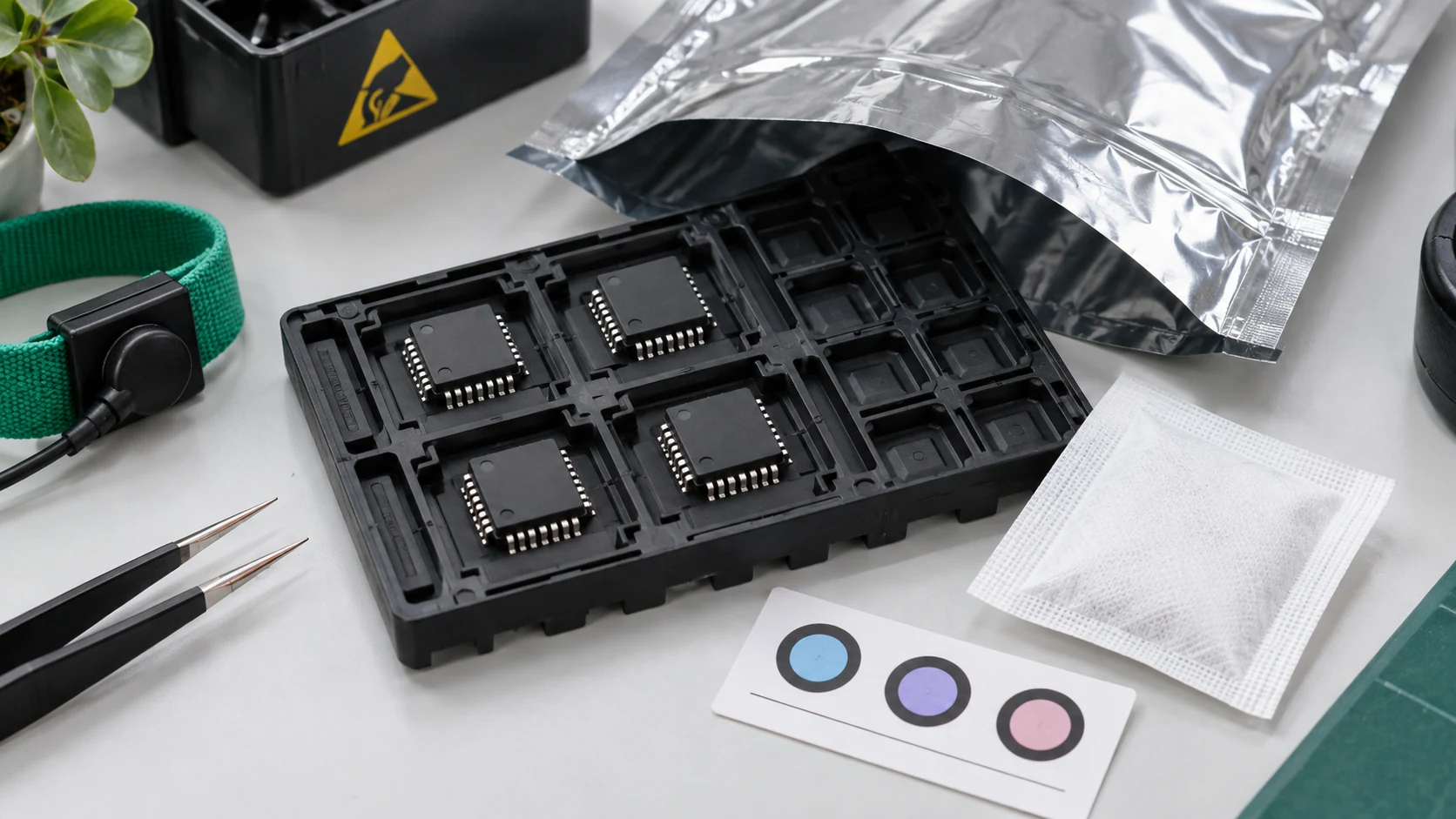
Record the package identity and condition before opening. Check whether the moisture-barrier bag is intact, whether its labels remain associated with the material, and whether the specified packaging accessories are present. If damage is found, preserve photographs and the original identification for the receiving disposition.
Read the humidity indicator card according to its instructions and the approved receiving procedure; interpretation can differ between card types. An acceptable reading cannot establish an unknown earlier exposure history. Also check the bag type: a generic antistatic bag may not provide the required moisture barrier.
Track exposure through splitting and storage
For an opened package, retain the opening time, relevant ambient conditions, storage intervals and any approved treatment record. When splitting a reel or tray, give each split package a record linked to the original lot. Send that record with the material so the assembler can account for exposure before shipment.
Use the approved dry-storage procedure to determine whether exposure accumulation can be paused or prior exposure recovered. Putting parts in a dry cabinet does not, by itself, establish that their floor life has been restored. Record the storage conditions and duration required by the procedure.
Record whether the material is released or on hold
Use the conditions below to identify the next receiving action. Release material only after the required checks and process approval are complete.
| Observed condition | Initial action | Evidence needed |
|---|---|---|
| Intact identified dry pack | Inspect against the agreed receiving procedure. | Part identity, labels, package condition and applicable requirements. |
| Opened pack with records | Calculate remaining exposure allowance under the approved rules. | Opening, exposure, storage and any treatment history. |
| Opened pack without history | Quarantine pending a process decision. | Supplier clarification or an authorized recovery/disposition plan. |
| Damaged bag or an indicator reading that needs review | Hold and document the observation. | Investigation and approved next operation. |
| Previously treated material | Check the treatment and subsequent handling record. | Approved treatment procedure, completion record and subsequent exposure. |
Have the process engineer approve any drying treatment
If drying is required, a qualified process owner must select the conditions. The package, exposure state, carrier temperature rating and any supplier restrictions all matter. A tray, reel or tape that protects the part in storage may not tolerate a proposed oven cycle.
Record the approved treatment, its completion and the handling requirements afterward. Avoid unnecessary or repeated heating, and return the material to the specified storage conditions. Do not apply a bake temperature or duration taken from another part without checking its suitability for this package and carrier.
For storage policy background, see TI’s product shelf-life guidance. If the label, device documentation and handling records conflict, ask the supplier and assembly process engineer to resolve the discrepancy before using the parts.
Send the handling record with the assembly kit
Send the part number, lot identity, quantity, packaging status, exposure record and release or hold decision with the kit. Name the person authorized to approve further action. Allow time for this review when planning material delivery and the assembly start.
Include moisture-sensitive part status in the BOM sourcing-risk review. Keep the exposure and storage records for material left over after a build. When agreeing on the component-sourcing scope, specify who maintains these records and who approves the material for reuse.
Cover image: AI-generated editorial illustration, not a production record or an acceptance reference.