PCB Assembly Critical Path: Boards, Parts, Programming and Test
Direct answer: The PCB assembly critical path is the longest chain of dependent work from released files to accepted boards. It commonly runs through one of four lanes: bare-board fabrication, the latest required component, programming readiness, or test readiness. Approval delays can become a fifth lane. Lead time should therefore be planned from dated dependencies and decision gates, not from assembly cycle time alone.
What decision does this guide support?
Use this map when a project has a required delivery date and several activities can proceed in parallel. The purpose is to identify which dependency controls the finish date, where float exists, and what decision must be made early. The critical path can change during the build as stock, engineering questions, or test readiness change.
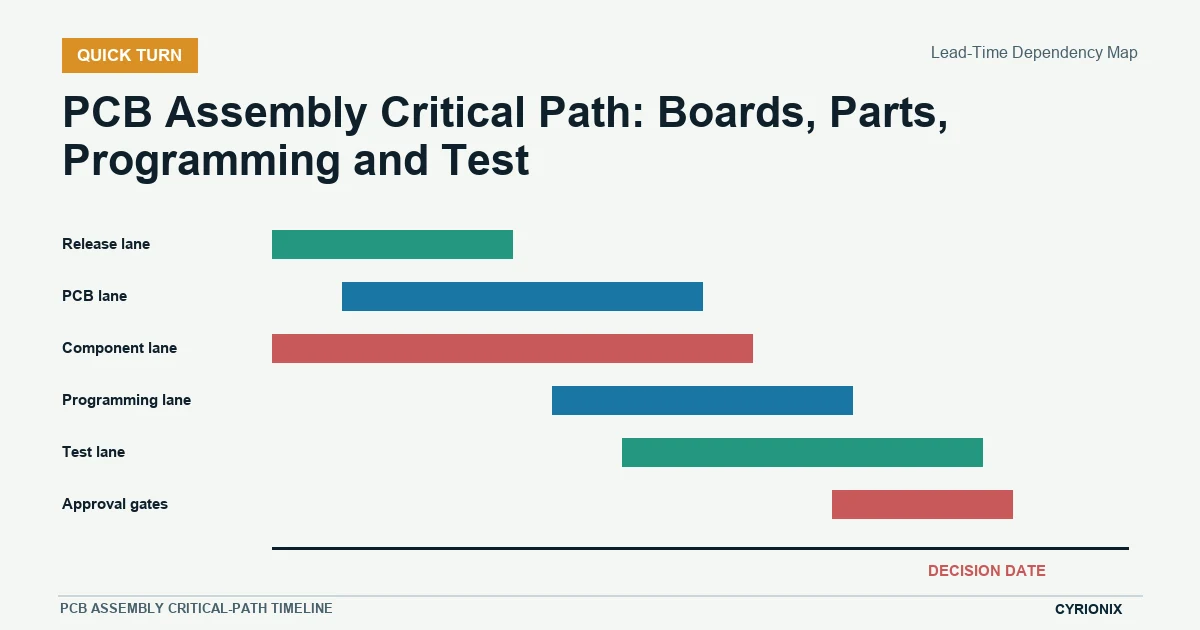
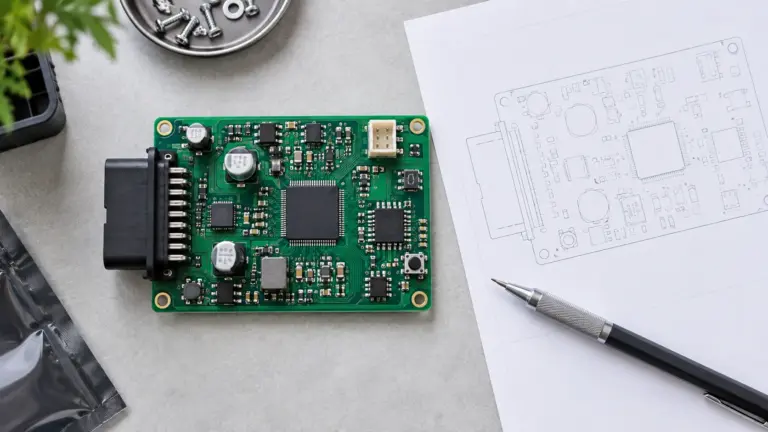
PCB assembly lead-time dependency map
Map each lane from the same approved release date. A hold condition means the schedule is being measured against an assumption rather than a completed prerequisite.
| Control point | Required action or evidence | Hold condition |
|---|---|---|
| Release lane | Complete and approve the manufacturing baseline before measuring build time. | The clock starts while files are still changing. |
| PCB lane | Map engineering questions, fabrication, finish, panelization, and inbound transit. | Board delivery is treated as one unexplained date. |
| Component lane | Map availability, MOQ, alternates, purchasing approvals, and inbound checks. | The latest required component arrives after the planned setup. |
| Programming lane | Prepare binaries, tools, access, settings, and verification before assembly completes. | A finished board must wait for software inputs. |
| Test lane | Prepare fixtures, scripts, limits, golden behavior, and failure disposition in parallel. | Acceptance work starts only after boards arrive. |
| Approval gates | Name decision owners and response deadlines for every exception. | An unresolved decision sits on the critical path. |
Define a real release date
The release milestone requires one approved manufacturing package, quantity, sourcing model, verification scope, and commercial authorization. If engineering continues changing the BOM or layout, track that work separately and move the baseline date when a new revision is issued. Calling the RFQ date “day zero” understates pre-production uncertainty.
Break the PCB fabrication lane into milestones
Include design-for-manufacture questions, stack-up or impedance approval, panelization, material preparation, fabrication, surface finish, electrical test, outgoing inspection, and transit to assembly. Identify customer approval points. A nominal fabrication lead time is not useful unless its entry conditions and shipment endpoint are clear.
Model components by latest required arrival
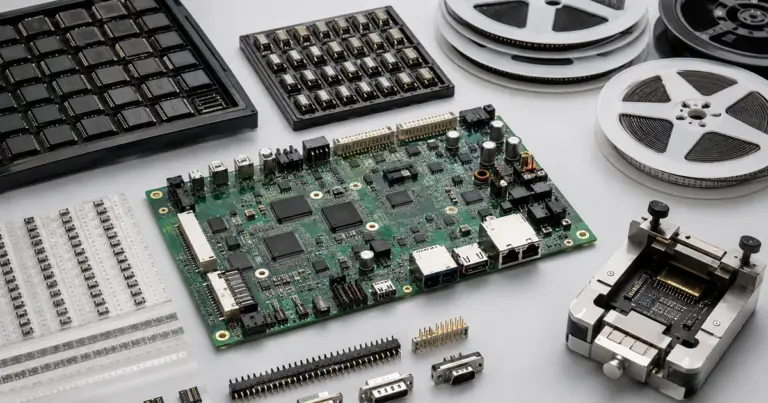
Check availability for exact MPNs and sufficient quantity, then include approval, order placement, supplier cutoff, freight, customs where relevant, and incoming verification. The critical component is not always the most expensive or longest advertised lead-time item; it is the item whose usable arrival constrains the planned assembly sequence.
Run programming readiness in parallel
Prepare the production binary, version record, programmer, adapters, credentials, serialization input, and verification procedure before boards leave assembly. If programming occurs at IC level or before a later operation, place it correctly in the dependency network. Protect access to sensitive files without making them unavailable at the required milestone.
Develop test readiness as its own workstream
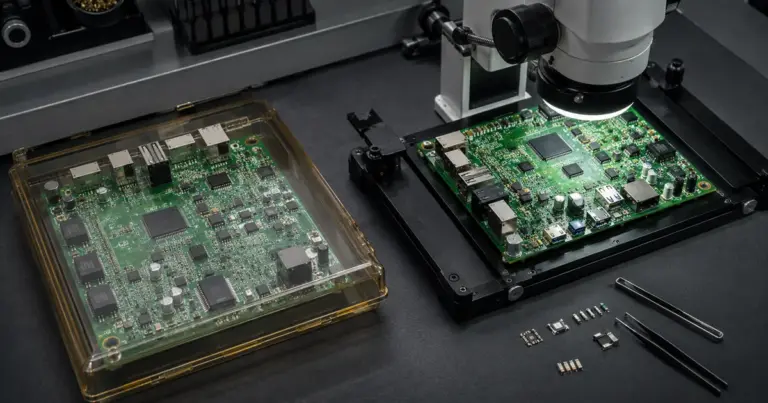
Fixture design, fabrication, software, golden-unit definition, limits, debug, operator instructions, and failure disposition can take longer than board assembly. Assign an owner and dated deliverables while PCB and material work proceeds. Test readiness is complete when the method can produce interpretable evidence, not when a fixture has merely arrived.
Put approval gates on the schedule
Substitutions, fabrication questions, nonconforming material, first-article findings, and test failures require authorized decisions. Set response windows and escalation contacts based on time-zone coverage and technical authority. An unanswered one-hour production question can consume a full day when teams operate on opposite schedules.
Create a dependency-based delivery forecast
- Draw the lanes. List dated work and dependencies for boards, components, programming, test, and logistics.
- Mark gates and float. Identify tasks that can move independently and approvals that block the next operation.
- Update from evidence. Replace estimates with actual order, shipment, receipt, release, and acceptance dates as the build progresses.
Critical-path planning questions
Can PCB fabrication and component sourcing run at the same time?
Usually, once the relevant files and BOM are released. Parallel work reduces elapsed time but increases exposure if the design later changes, so the release and cancellation rules must be clear.
What is the difference between lead time and cycle time?
Cycle time describes the duration of a specific operation. End-to-end lead time includes queues, approvals, procurement, transit, and dependent work before and after that operation.
How often should the critical path be updated?
Update it whenever a controlling assumption changes and at agreed project checkpoints. Current supplier confirmation, actual receipt, and completed approvals are stronger schedule evidence than the original quotation.
Related Cyrionix resources
The rapid PCB prototyping guide provides planning context for early builds. Use PCB component sourcing to structure the material lane.
Technical references
- KiCad fabrication and position-file documentation
- Altium ActiveBOM verification documentation
- Protolabs prototype-to-production white paper
Working toward a fixed build date? Request a quick-turn review based on the actual dependency path.