
How to Review a PCB BOM for Component Sourcing Risk
Review BOM specificity, availability, MOQ, lifecycle and controlled substitution decisions before component purchasing or assembly release.
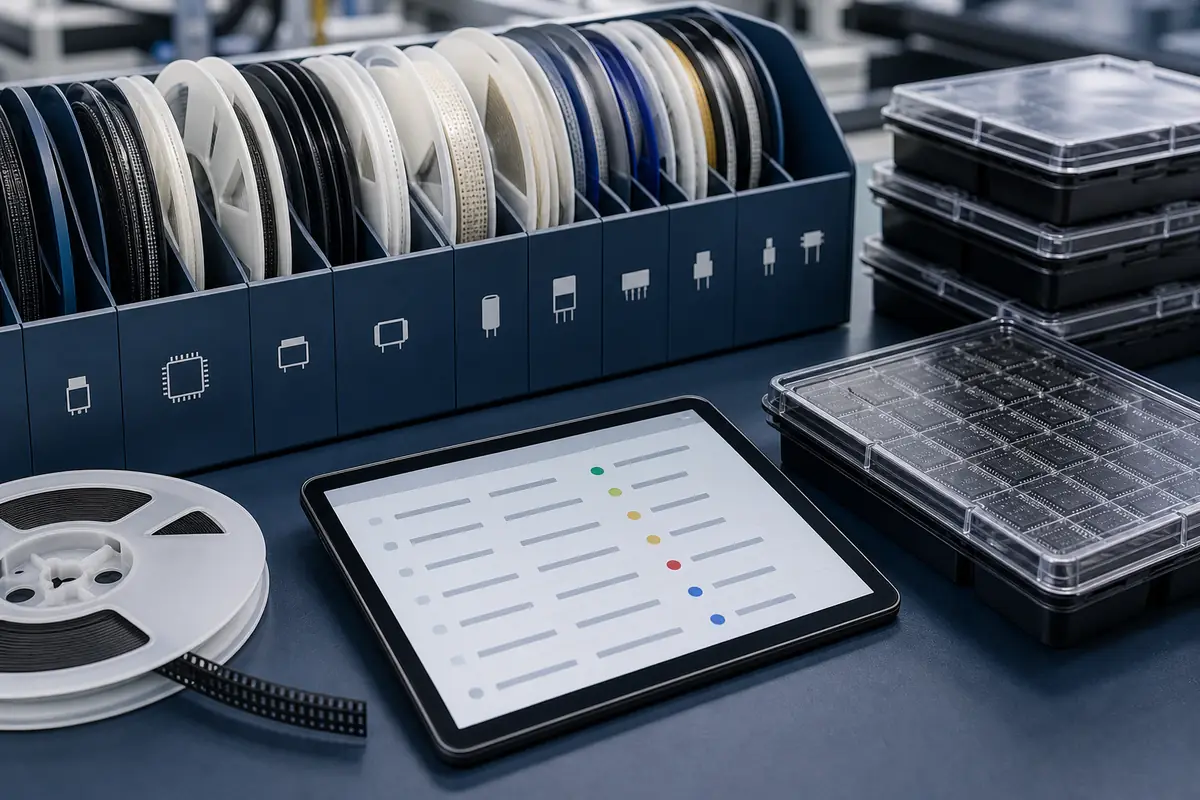
Component sourcing affects whether a prototype can start, whether it matches the intended design and whether the next build can repeat it. Exact manufacturer part numbers reduce ambiguity, but availability, MOQ, lifecycle and packaging still matter. Any substitution should be reviewed for electrical, mechanical, firmware, regulatory and test impact before purchase.
Five sourcing risks that change a build
| Risk | Prototype impact | Control |
|---|---|---|
| Incomplete part identity | Wrong package or specification may be quoted | Use manufacturer and exact MPN |
| Short supply | Assembly waits or quantity is reduced | Check stock and alternatives before release |
| MOQ / pack size | Material cost and excess increase | Record purchasing unit and excess ownership |
| Lifecycle status | A successful prototype cannot be repeated | Review manufacturer lifecycle and replacement path |
| Uncontrolled substitution | Function, fit or compliance may change | Require customer engineering approval |
A practical substitution review
- Compare electrical ratings and tolerances.
- Confirm package, land pattern, height and orientation.
- Check firmware dependencies and programmable content.
- Review temperature, reliability and regulatory requirements.
- Record who approved the change and for which revision.
- Update the BOM rather than leaving approval in an email thread only.
Prototype sourcing vs recurring sourcing
A prototype may use a short-term available part to unblock learning, but that decision should be visible. Before low-volume production, review whether the selected part and source can support the expected follow-on demand, documentation and change control.
Questions for the BOM review
Should every line have an approved alternative?
Not necessarily. Some components should have no substitute; others benefit from pre-approved options. State the rule per line or component class.
Who approves a replacement?
The customer’s responsible engineering owner should approve changes after reviewing form, fit, function and project-specific requirements.
Does available stock guarantee authenticity?
No. Source, documentation and traceability requirements must be defined and evaluated for the project.
Continue your project planning
Use the related service and resource pages to turn this guidance into a reviewable manufacturing request.
For the report’s trade, manufacturing and supply evidence, see PCB sourcing data for 2026. For the broader publication collection, visit Cyrionix Research & Industry Data.