
PCBA Support for IoT, Robotics, AI & Industrial Electronics
Prototype and low-volume projects can share an assembly process while requiring different review priorities. Cyrionix coordinates project-specific manufacturing and sourcing review with Shenzhen manufacturing partners.
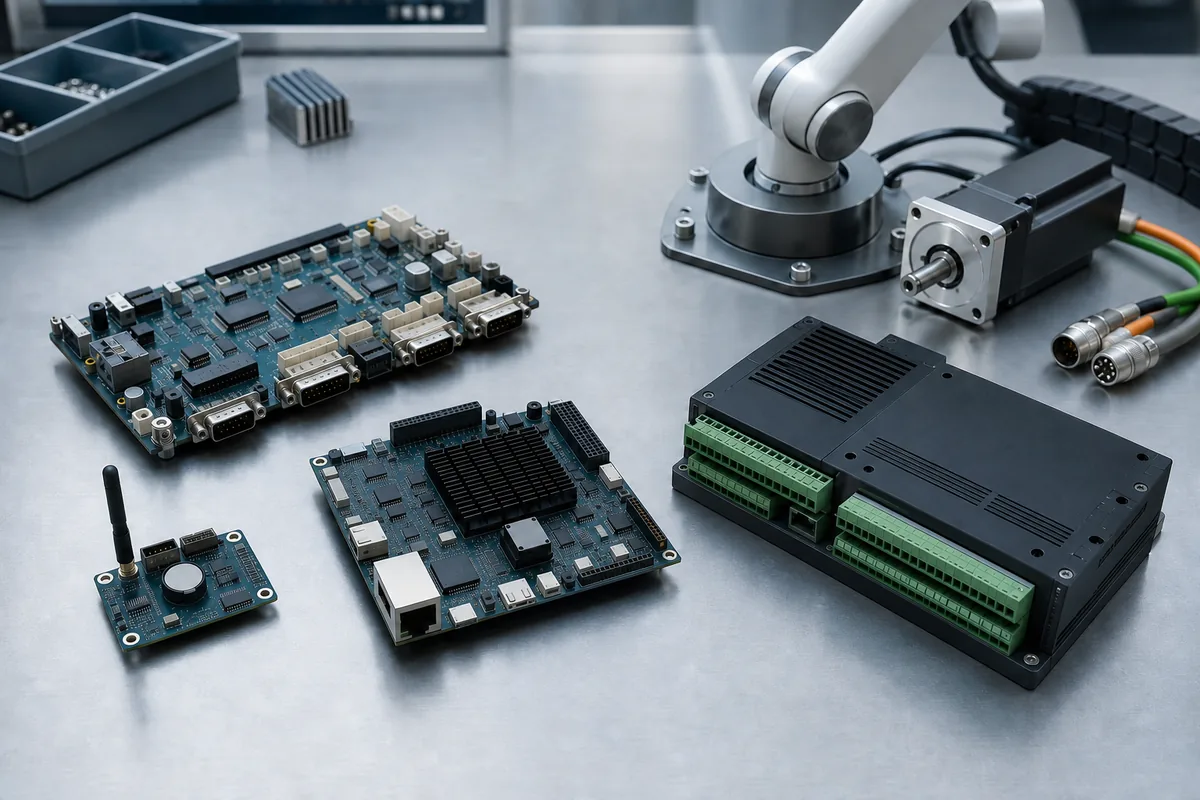
What does industry-focused PCBA support mean?
Industry-focused PCBA support applies a consistent assembly foundation while changing the review emphasis for electrical interfaces, power requirements, thermal and mechanical constraints, component lifecycle, sourcing risk, test requirements and revision control. Cyrionix uses that application context to coordinate project-specific review with Shenzhen manufacturing partners, while the released files, quantity, project stage and verification scope determine the practical build path.
Start with the hardware context, then review what matters
Each path below highlights common manufacturing review priorities. Explore the detailed industry pages for application-specific considerations.
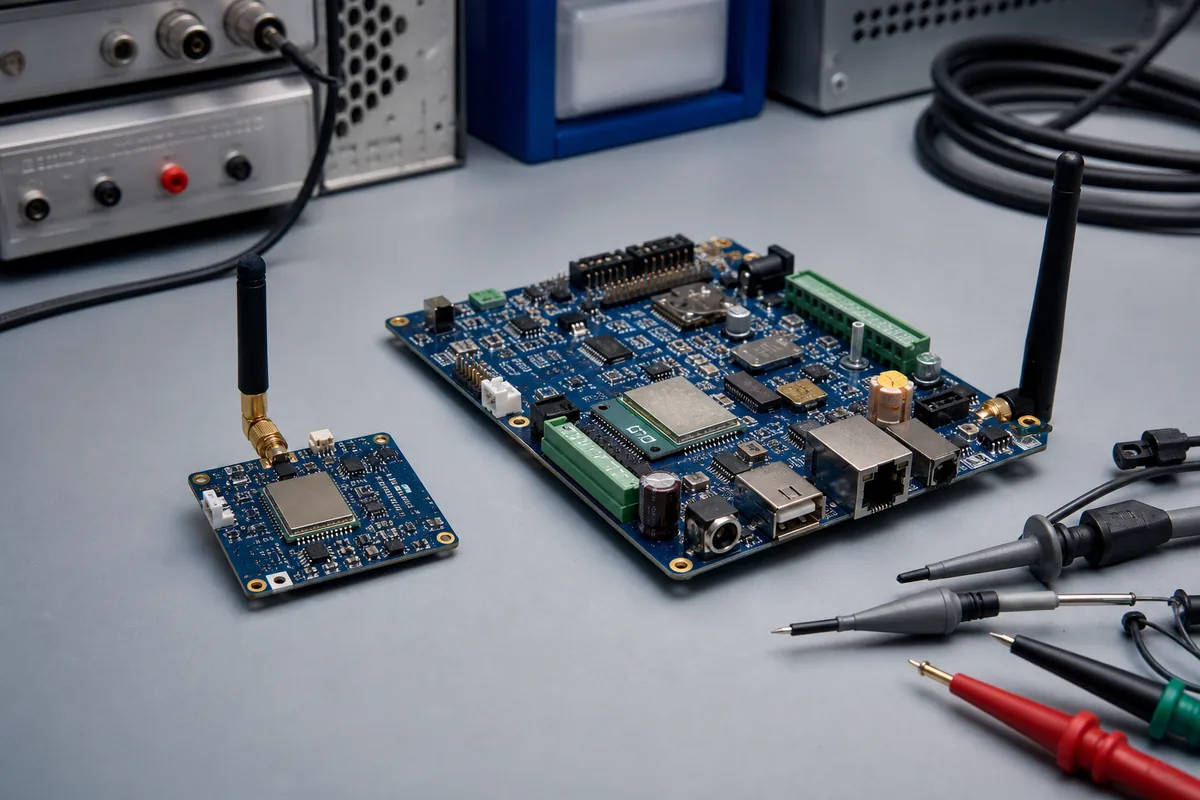
IoT Devices
Embedded sensors, gateways and connected controllers often bring interface, power and component-lifecycle questions into the build review.
- Wireless module availability
- Sensor interfaces
- Power assumptions
- Component lifecycle
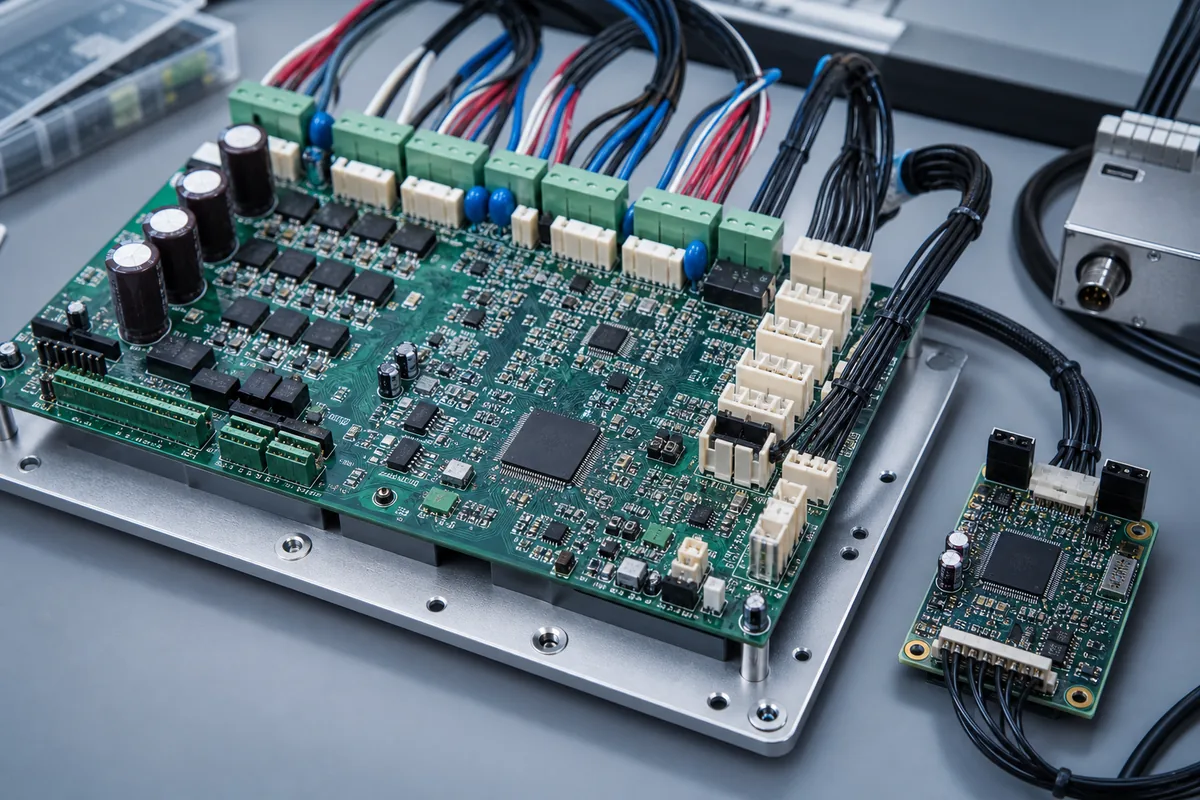
Robotics
Controller electronics may require earlier alignment around connectors, power stages, motion or sensor interfaces and functional-test access.
- Motor and sensor interfaces
- Connector review
- Power stages
- Functional-test planning
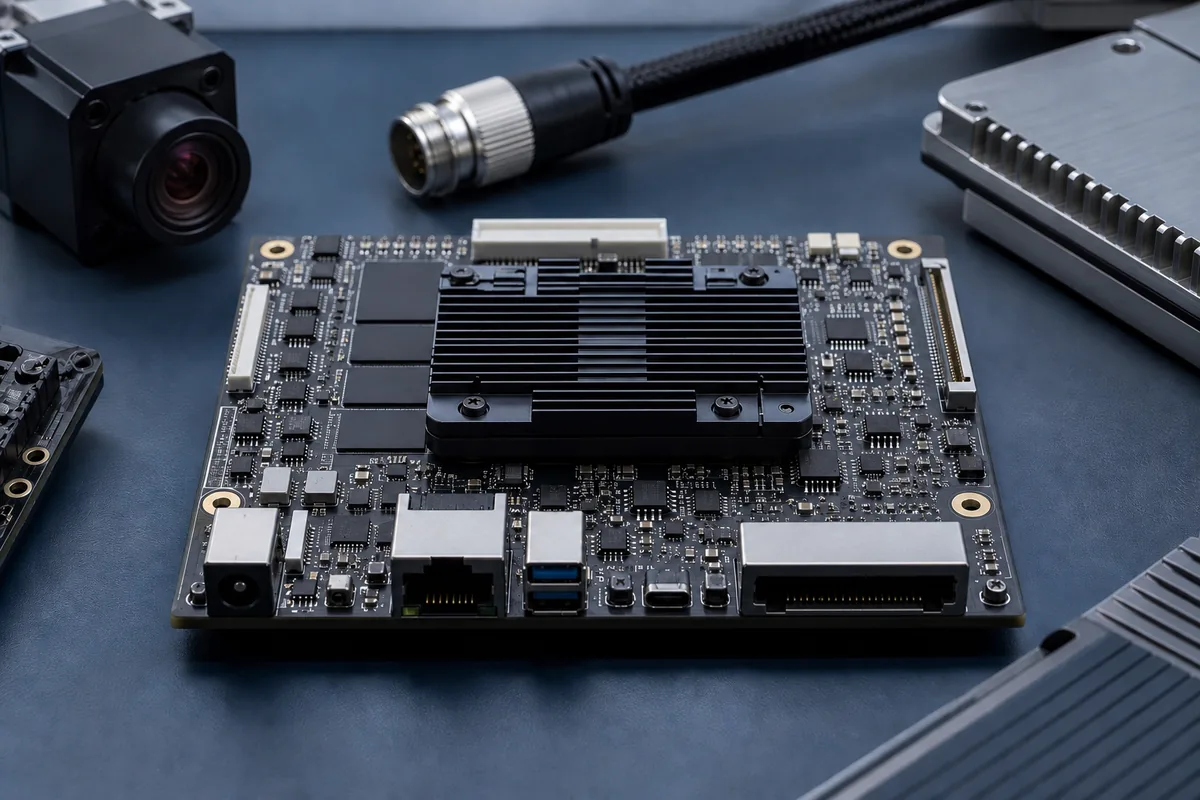
AI & Edge Hardware
Dense embedded-compute designs often put package density, thermal assumptions, constrained components and high-speed interfaces into focus.
- Compute availability
- Thermal assumptions
- Board and package density
- Interface complexity
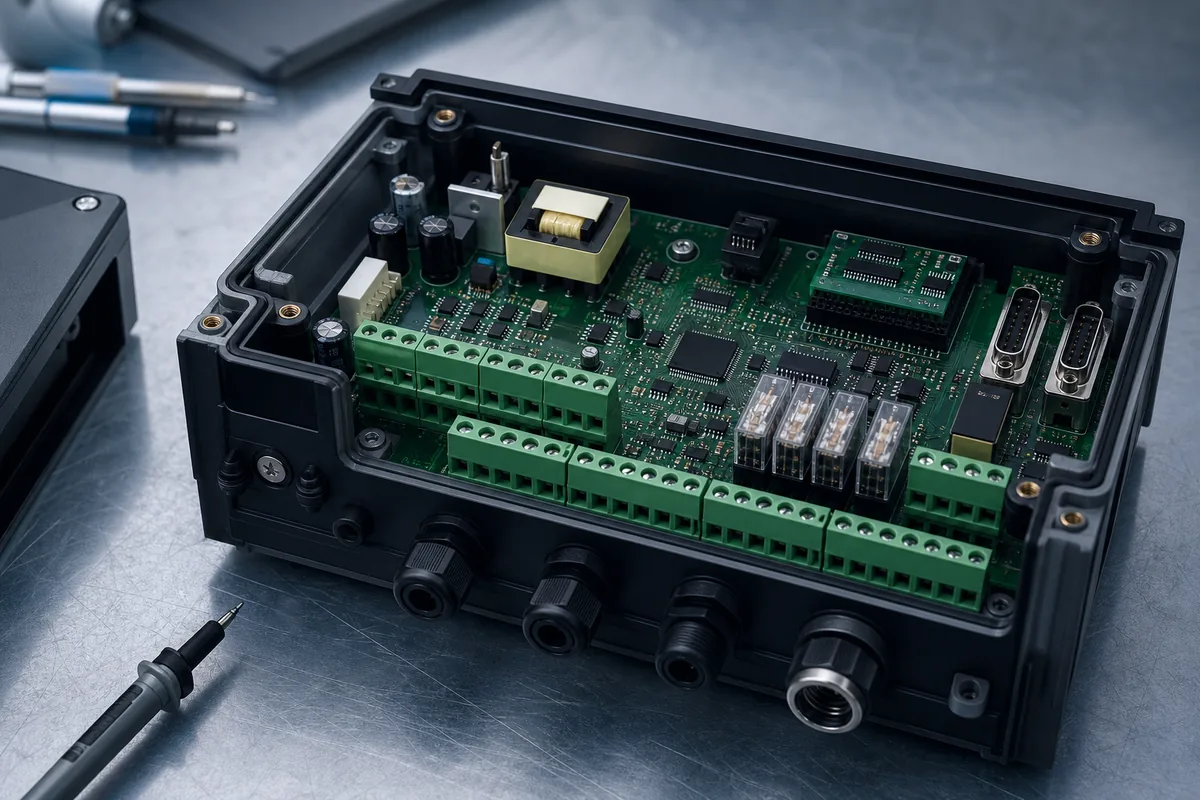
Industrial Electronics
Control and monitoring electronics commonly benefit from disciplined revision records, interface review and planning for repeat low-volume demand.
- Revision control
- Connector interfaces
- Lifecycle planning
- Repeatability
What changes by hardware type
This matrix surfaces common review emphasis. It is a conversation guide for manufacturing review, not a universal technical specification for every design.
| Review area | IoT | Robotics | AI & Edge | Industrial |
|---|---|---|---|---|
| Connectivity / interfaces | Wireless modules and sensor buses often matter. | Motor, encoder and sensor interfaces may dominate. | High-speed compute, camera or network interfaces may need earlier review. | Field, terminal and control interfaces are common focus areas. |
| Power profile | Low-power operation or battery assumptions may shape review. | Logic and higher-current motion stages may coexist. | Compute rails and peak-load assumptions are often important. | Input protection and control-power context may require clarification. |
| Thermal considerations | Enclosure and duty-cycle context can affect assumptions. | Drivers and actuators may concentrate heat. | Dense compute packages often require early thermal context. | Ambient conditions and enclosure airflow may matter. |
| Mechanical constraints | Compact form factor and antenna clearance can be relevant. | Connectors, mounting and cable paths are often central. | Heatsink, module and enclosure stack-up may constrain assembly. | Terminal access, mounting and serviceability may be priorities. |
| Component lifecycle | Wireless and sensor continuity may affect revisions. | Drivers, sensors and connectors may need availability review. | Constrained compute devices can shape sourcing strategy. | Longer product lifecycles often increase continuity concerns. |
| Revision control | Module or sensor substitutions should stay visible. | Firmware, controller and harness changes need alignment. | Compute, memory and interface revisions may be tightly coupled. | Controlled documentation supports repeat builds and service life. |
| Test strategy | Connectivity and sensor checks may be useful. | Motor, sensor and I/O access may require planning. | Power-up, interface and thermal observations may be relevant. | I/O, control and repeatability checks may be prioritized. |
Actual review scope is confirmed from the released design data, application context and agreed verification requirements.
Start with the manufacturing stage
The product category provides application context, but the current manufacturing stage determines the most relevant service path.
Application context changes the questions that deserve emphasis.
Stage, schedule and BOM readiness determine the practical path.
What to prepare for project review
Useful context reduces assumptions. Not every item is mandatory for an initial conversation, but released data and clear constraints make manufacturing review more specific.
Use the PCB assembly file checklist →- Gerber filesReleased PCB fabrication data.
- Bill of materialsManufacturer part numbers and approved notes.
- CPL / placement dataComponent coordinates and orientation data.
- Assembly notesDrawings, special handling and build context.
- Quantity and stagePrototype, validation or repeat-build intent.
- Testing requirementsRequested checks and acceptance context.
- Schedule and destinationTarget timing and delivery country.
- Application constraintsRelevant power, thermal, interface or mechanical context.
Prepare the build package and choose the next stage
Use practical checklists and decision guides to frame the files, sourcing questions and production transition before requesting review.
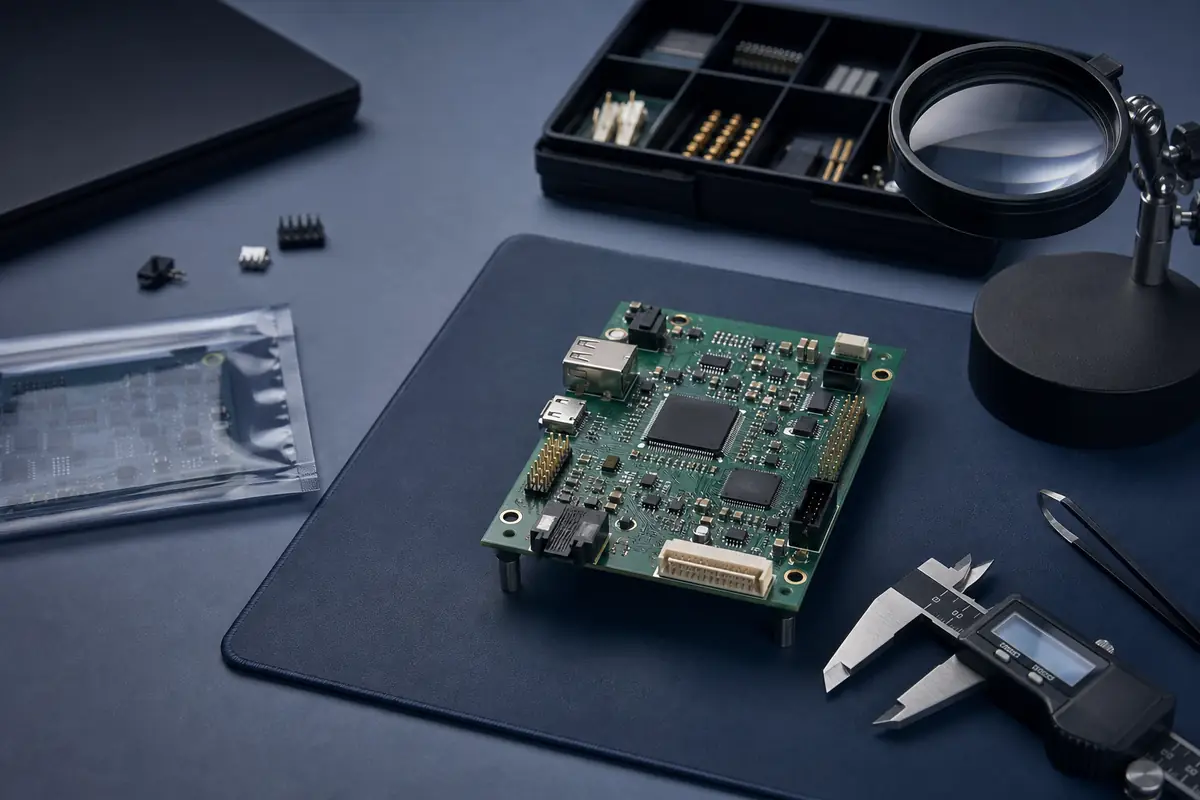
PCBA Prototyping: From Files to Assembly
A stage-by-stage guide for moving released design data toward a working prototype assembly.
Read the Prototyping Guide →Ready to review your hardware project?
Share the released files, quantity, current stage and application constraints for a practical manufacturing and sourcing review.